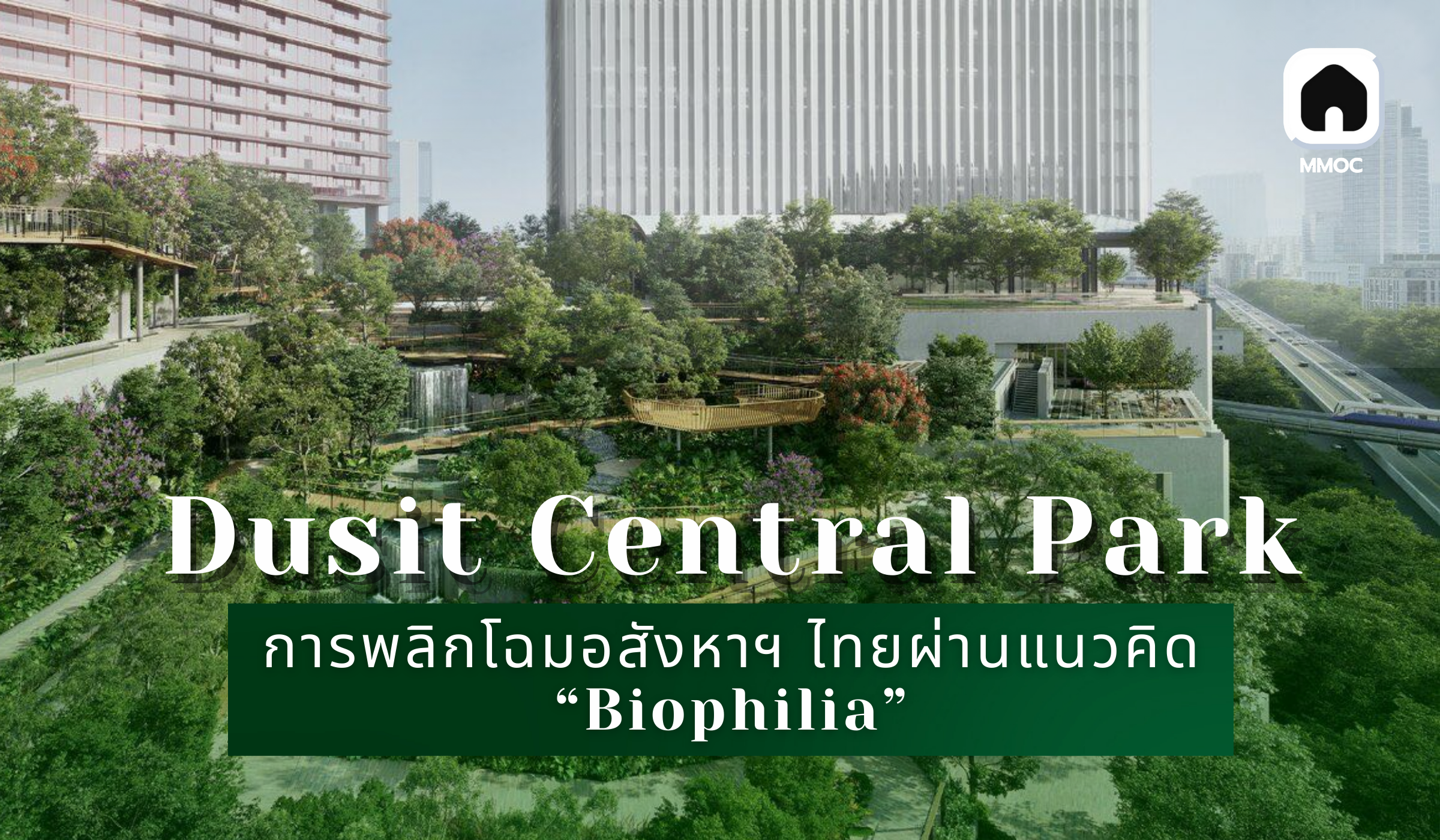
Project Dusit Central Parkis a prime example of modern real estate development that combines "luxury + sustainability" under the concept of Biophiliawhich emphasizes the connection between humans and nature. This project is not only a landmark in the heart of Super Core CBD of Bangkok but also reflects 5 important trends that directly affect real estate in Thailand and globally.
1. Biophilic Design A new standard for high-end real estate
Biophilic Desigh is becoming the "new standard" for building and living space design, especially for mixed-use projects or high-end residential projects, both in terms of marketing and consumer demand.
2. Green Asset is a competitive edge in accessing capital and creating added value.
Green BuildingorGreen Asset is not limited to "reducing global warming" but has a clear impact on
In the case of Dusit Central Park, the use of Solar Roof systems, HVAC Optimization and a closed water recycling system within the project is considered a model for Green Tech Integration in Thai real estate.
3. Urban Ecology is a new dimension of "location" that is more than just convenience.
In the past, a good location had to be close to the train or business center. But in the future, a good location must have an urban ecosystem that supports quality of life.
4. Consumer behavior has changed Create a sustainable difference
After the COVID era, buyers prioritize
Projects like Dusit Residences, which combine private green spaces, sky gardens, and natural air purification systems, have become products that meet the needs of premium buyers who are looking for "long-term quality of life."
5. ESG It's not just about CSR, it's a Core Strategy
The approach of Dusit Central Parkshows that ESG is more than just an image strategy. But it is the main structure of the project design, management and marketing.
Conclusion for real estate entrepreneurs
Dusit Central Park is an important case study that reflects how the direction of Thai real estate is changing. And whoever is ready to adapt first will have the advantage in the battlefield of the future city.

 TH
TH ENG
ENG CH
CH